Free-to-play as structure
Remove the upfront purchase and every design decision migrates toward a single question: will this person come back?

With no purchase at the door, every design decision moves to retention.
Photo: freestocks.org / Pexels
The door disappears
A paid game charges once and hands control to the player. Free-to-play reverses the arrangement. The game must earn attention before it earns money, and then earn both continuously. That single structural shift — no price at the door — propagates through every subsequent design choice: how long a session runs, where friction appears, what gets rationed, what gets given away.
The model was formalised on social networks around 2009, when Zynga's Facebook games demonstrated that enormous audiences would engage with mechanics built around timers, friends, and small optional purchases. Mobile accelerated the logic once Apple and Google made zero-price apps a discoverable category. A free download has no commitment barrier; the player can leave just as frictionlessly. So the design cannot assume engagement — it has to manufacture it, moment by moment.
Retention replaces revenue as the first metric
In a paid game, the designer's primary obligation is to the experience a player has paid to receive. In a free-to-play game, that obligation shifts. Revenue is downstream of retention: a player who leaves on day one cannot spend on day thirty.
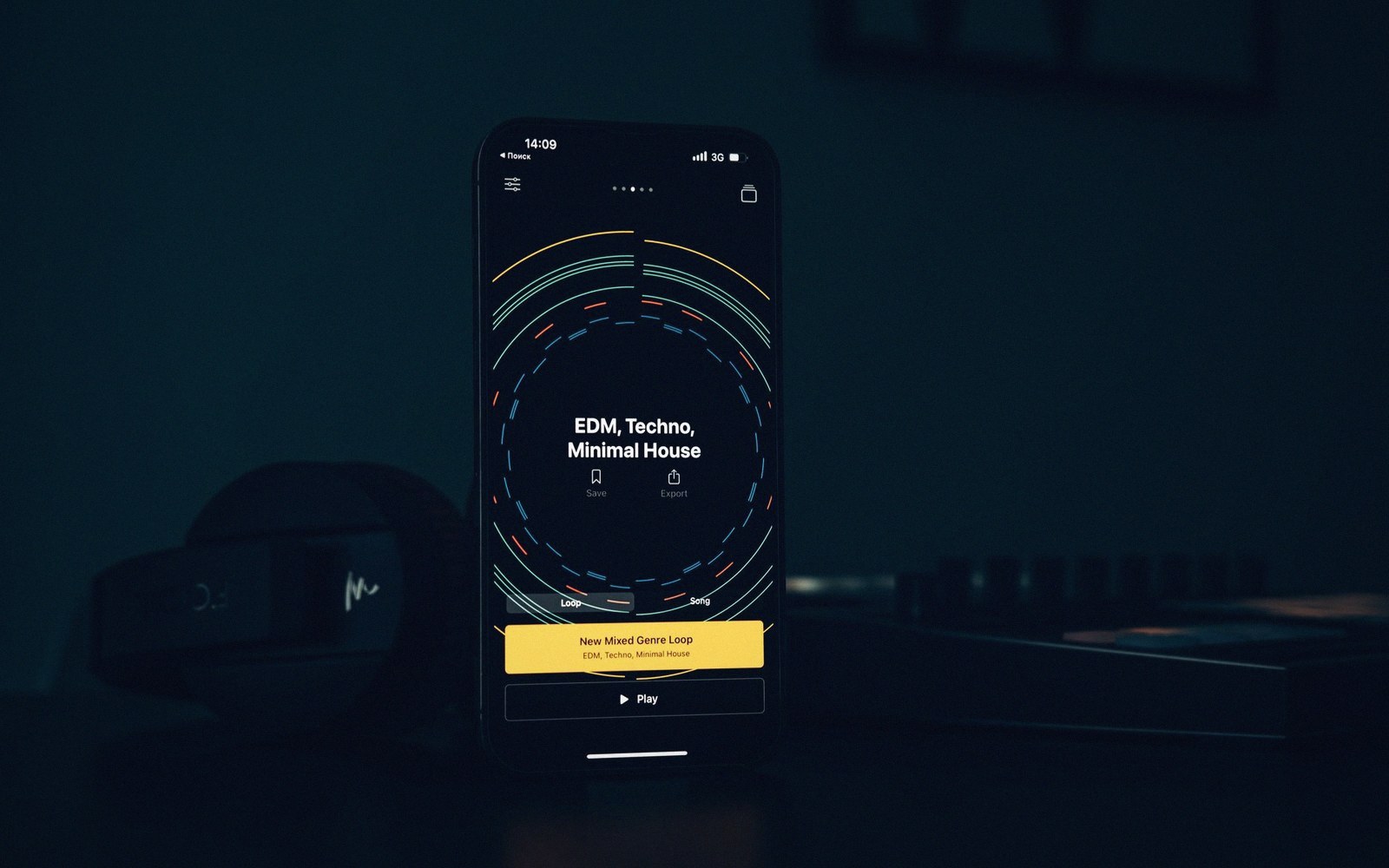
The loop has to hold a player who has paid nothing and owes nothing.
Photo: Egor Komarov / Pexels
Studios like King and Supercell both track what the industry calls the retention curve — typically expressed as the percentage of players still active on day one, day seven, and day thirty after install. A gap in the day-one number means the opening is failing. A collapse between day seven and day thirty means the mid-game has nothing to hold.
This is why free-to-play games are heavily front-loaded with onboarding, and why the first session is the most precisely engineered part of the product. Most players who will ever leave, leave immediately. The design consequence is that tutorials are not instruction — they are retention mechanics in disguise, built to manufacture the first feeling of competence and progress before the player reaches a natural stopping point.
How the model changes priorities
Lifted out of the flow
- No upfront price — engagement must be earned before revenue can follow
- Retention metrics (day 1 / 7 / 30) function as the primary design feedback signal
- Monetisation placed before the core loop earns trust is structurally counterproductive
- Friction (timers, lives, resources) is load-bearing architecture, not decoration
The core loop — act, reward, invest, and repeat — has to be legible and satisfying before any monetisation mechanic appears. Asking for money from a player who does not yet value the loop is structurally wasteful, because they are not yet retained. The loop earns trust; trust precedes spending.
Friction as architecture
When the price at the door disappears, friction moves inside. Timers, limited lives, constrained resources: these are not punishments but pacing systems, and their placement in the design is load-bearing. Too little friction and the player exhausts the content and leaves.

Structure first: what the game asks for, and when it is allowed to ask.
Photo: picjumbo.com / Pexels
Too much and they leave from frustration. The boundary between these outcomes is narrow and empirical — Helsinki-based Supercell became known for using live metrics from small test audiences to find it, cancelling games that failed to cross it before wider release.
The free-to-play loop is therefore a balancing act between friction and reward that a paid game rarely needs to perform so precisely, because the paid game has already been chosen. The free-to-play game is still making its case on every screen, in every session.
Bogost's Cow Clicker (2010) — satirical exposure of the loop as its own empty reward
Criticism of this structure is substantial. Ian Bogost built Cow Clicker in 2010 partly to expose the loop's emptiness — the reward is the loop, and the loop is the product. Jesper Juul, in A Casual Revolution, argued that the friction introduced for monetisation is qualitatively different from the friction that makes play meaningful.
The design vocabulary for distinguishing pacing from pressure — between a mechanic that gives the session shape and one that exploits impatience — is still contested. What is not contested is the structural logic: without a price at the door, the door stays open both ways, and keeping the player inside is the whole design problem.
Also worth having to hand
Lifted out of the flow
The criticism in brief
- Juul's A Casual Revolution — distinguishes meaningful friction from monetisation pressure
- The line between pacing and exploitation remains a live design and ethical question