Supercell
Small independent teams with authority to cancel their own games, and a very short released list as a result.
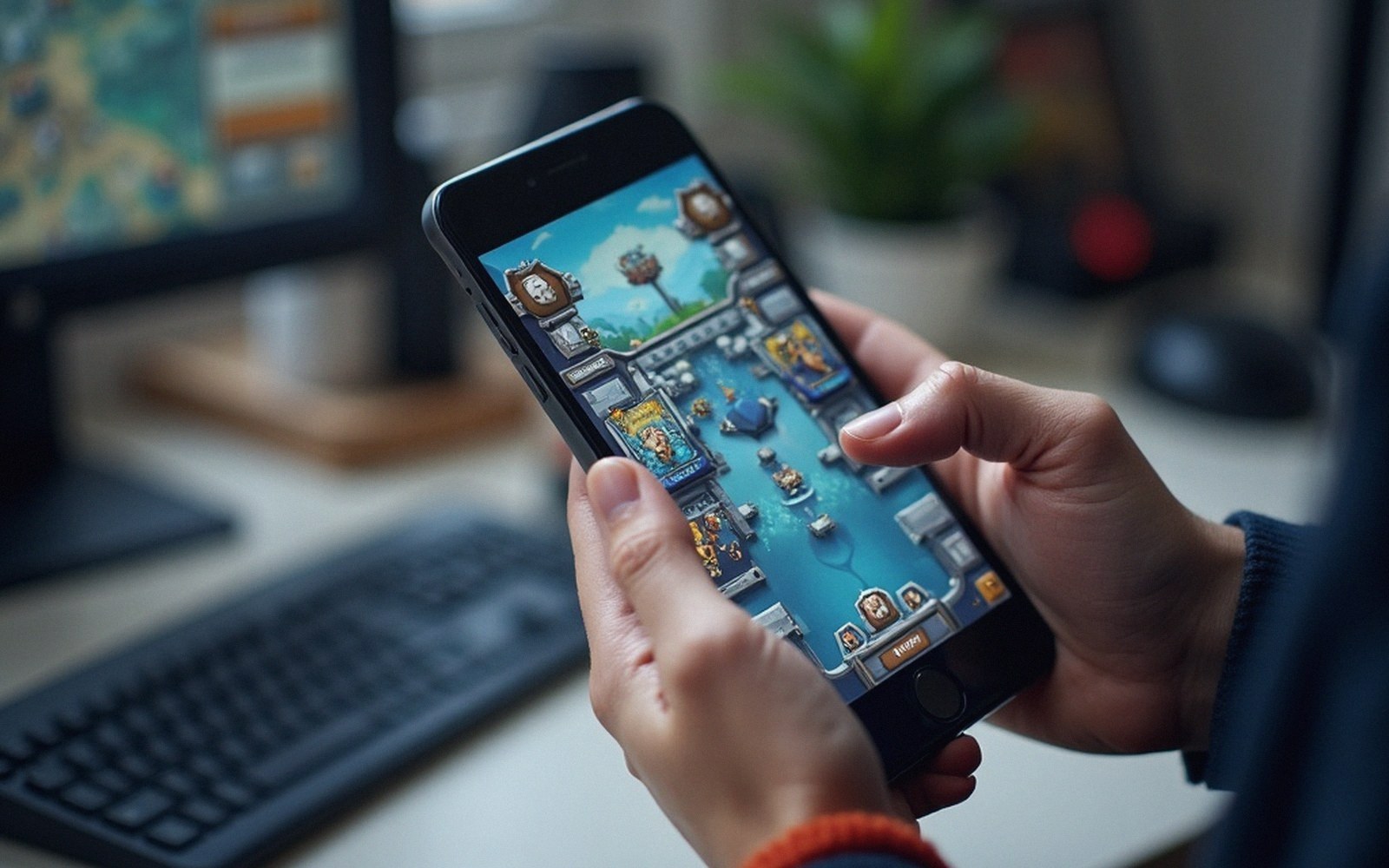
Small teams in Helsinki, with the authority to cancel their own games.
The studio that built its reputation on saying no
Helsinki produced one of mobile gaming's most studied studios not through volume but through restraint. Supercell was founded in 2010, and by the time its games had collectively reached hundreds of millions of players, it had shipped only a handful of titles — a ratio so extreme that other studios still cite it as either inspiration or rebuke, depending on their own release cadence.
The structural principle is unusual enough to have become the studio's defining public claim: small, autonomous teams — internally called "cells" — hold the authority to cancel their own games. No product needs to be killed from above, because the people building it carry the mandate to stop.
Supercell has marked several of those cancellations with a company-wide announcement and, reportedly, a toast. The logic is that celebrating a kill prevents the sunk-cost psychology that keeps bad games alive in most studios long past the point when the evidence has turned.
That evidence arrives fast. Supercell tests games in limited regional markets — Canada and Australia have served this function repeatedly — and reads the retention curves hard before any wider rollout. If day-one and day-seven numbers do not meet internal benchmarks, the argument for continuation is already weak.
Hay Day and Clash of Clans: the overlapping timer refined into a pacing system.
Photo: Castorly Stock / Pexels
Retention curves sit at the centre of this evaluation: a game that cannot bring a meaningful fraction of its players back on day seven is, in Supercell's framework, a game that has already failed the test.
The games that did survive this process have a recognisable structural logic. Hay Day, launched in 2012, is a farming and trading game whose production timers create a natural pacing system — a player plants, waits, harvests, and invests. Clash of Clans, also 2012, is a base-building and raiding game in which the same wait-and-build rhythm runs at a longer timescale, reinforced by clan membership that introduces social obligation as a retention layer.
How the model works
Lifted out of the flow
- cell structure — small autonomous team with authority to greenlight and cancel its own game
- regional soft launch — limited release to a test market (often Canada or Australia) to read retention and conversion before global rollout
- cancellation toast — Supercell has publicly celebrated killed games to counter sunk-cost inertia; the ritual externalises the decision
- the gap as monetisation — the interval between player action and reward is where the spend decision is offered; loop design and business model are the same choice
Clash Royale, released in 2016, accelerates the loop considerably by grafting a real-time card-battling mechanic onto the franchise, shifting session shape toward shorter, sharper bursts. Brawl Stars, which reached global release in 2018 after a long regional test, moved further into action territory.
What connects them is a legible core loop: act, reward, invest, wait. The wait is not punishment — it is the structural mechanism that determines session length and, consequently, the moment when a player is asked to make a decision about spending. Because Supercell's games are free to play, the gap between action and resolution is also the gap that the monetisation is built around.
A very short released list is the visible result of the cancellations.
A builder finishes in four hours, or it finishes now; the choice is offered at the exact moment the game has built enough investment to make the cost feel worth considering. The design and the business model are the same decision, not separate ones.
The cell structure shapes this too. Small teams — Clash of Clans was reportedly developed by fewer than a dozen people before launch — mean that every person on a project has full sight of what the retention and conversion numbers are doing.
2012 — Hay Day (farming, production timers)
There is no handoff between design and analytics; the loop and its measurement are owned by the same group. That compression of feedback accelerates learning, which is part of why the regional-test model works: a cell can read what a limited rollout is telling it and respond quickly, rather than waiting for a broader launch to surface the problem.
Supercell's majority stake was acquired by Tencent in 2016, but the studio has continued to operate from Helsinki with its internal structure largely intact, at least by its own public account. The independence claim is part of the brand now, inseparable from the games themselves, and that makes it hard to assess from outside.
Also worth having to hand
Lifted out of the flow
Chronology of shipped titles
- 2012 — Clash of Clans (base-building, raid cycles, clan social layer)
- 2016 — Clash Royale (real-time card battle, shorter sessions)
- 2018 — Brawl Stars (global release after extended regional test)
What the output record demonstrates more straightforwardly is that the filtering process works: a short list of durable games with long-running active player bases is a result, whatever the internal mechanism. In an industry that frequently treats volume as a strategy, that particular answer to the question of how to ship has been, at minimum, worth watching.