One hand versus two
The grip you design for determines which journeys your game survives.
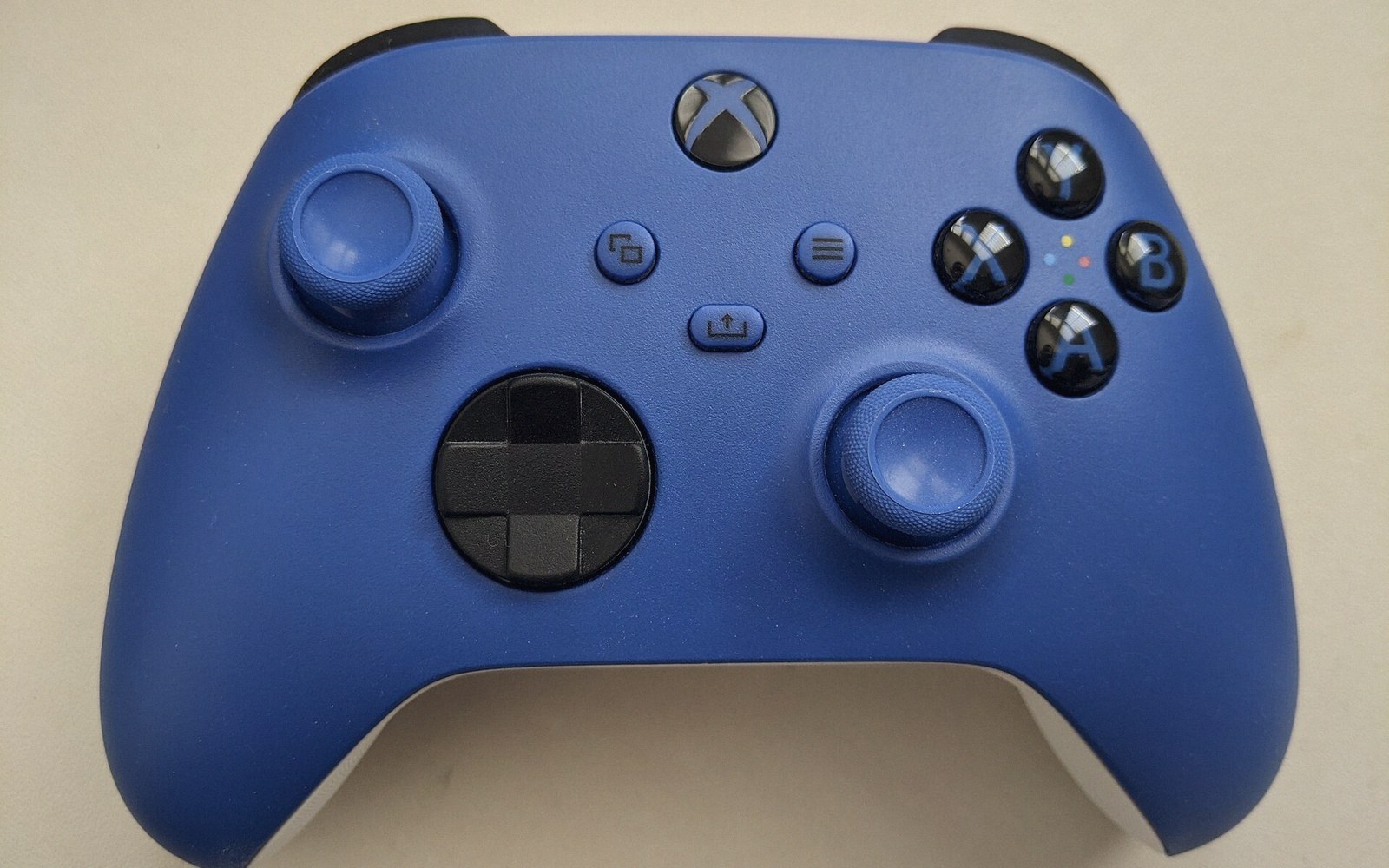
A console pad spreads eight controls across ten fingers. A phone gives one thumb the whole surface.
Photo: Xbox Wireless Controller, Model 1914 'Shock Blue' · Wikimedia Commons
The commute is a one-handed problem
A player on a crowded train is holding a rail with one hand and a phone with the other. A player pushing a pram is managing the pram. A player in a waiting room has a coffee. These are not edge cases — they are the most common mobile contexts, and they share a single structural fact: one hand is already occupied.
Steven Hoober's field research on how people actually hold phones found that roughly half of observed interactions used a single hand, thumb doing all the work. The thumb moves in an arc pivoting near the bottom corner of the device — the reachable arc — and anything outside that arc demands a grip shift. A grip shift is friction. Enough friction ends the session.
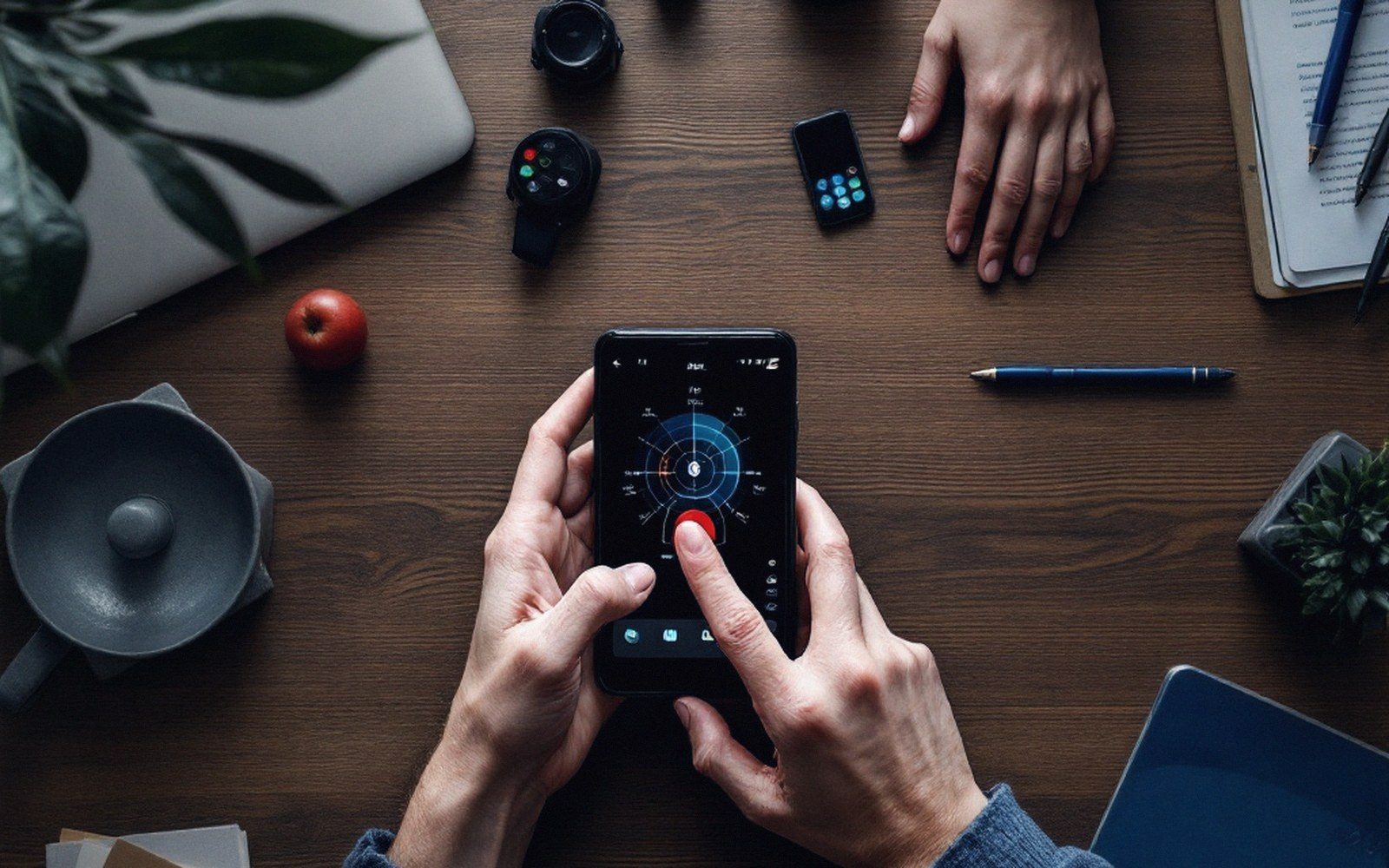
One-handed on the move, two-handed once seated: the same player, two reach maps.
Two-handed play is not impossible on a phone; it is simply situational. It works at a desk, on a sofa, on a long flight. The problem is that a design which requires two hands excludes every context where one hand is unavailable, and mobile players move between contexts continuously. An action placed in the top corner may be fine at home and unreachable on the bus.
Paul Fitts's law formalises the cost: travel time to a target rises with distance and falls with target size. The touch target principles from Apple's Human Interface Guidelines and Google's Material Design both follow from this — large targets near the thumb's natural resting position cost the least.
Design principles extracted
Lifted out of the flow
- The thumb's arc pivots near the bottom corner; distance from that pivot is the measure of cost
- Fitts's law: larger targets closer to the natural resting point are reached faster and with fewer errors
- Grip handedness mirrors the comfortable zone — right hand puts it bottom-left, left hand bottom-right
- Core loop actions belong in the comfortable zone; secondary actions may live outside it
When the operating hand changes, that resting position moves. A right-handed one-handed grip puts the natural zone bottom-left; switch to left-handed and it mirrors. Designing for both means keeping critical actions low and central.
The practical answer is not to ban two-handed gestures entirely, but to make the core loop completable with one thumb. Zooming, rotating, secondary configuration — these can live in less comfortable zones. The action that advances the game must not. Every primary tap that drifts toward the top of the screen is a small wager that the player is sitting down.
A layout that only works in a cradle has quietly given up the commute.
Photo: Brett Jordan / Pexels