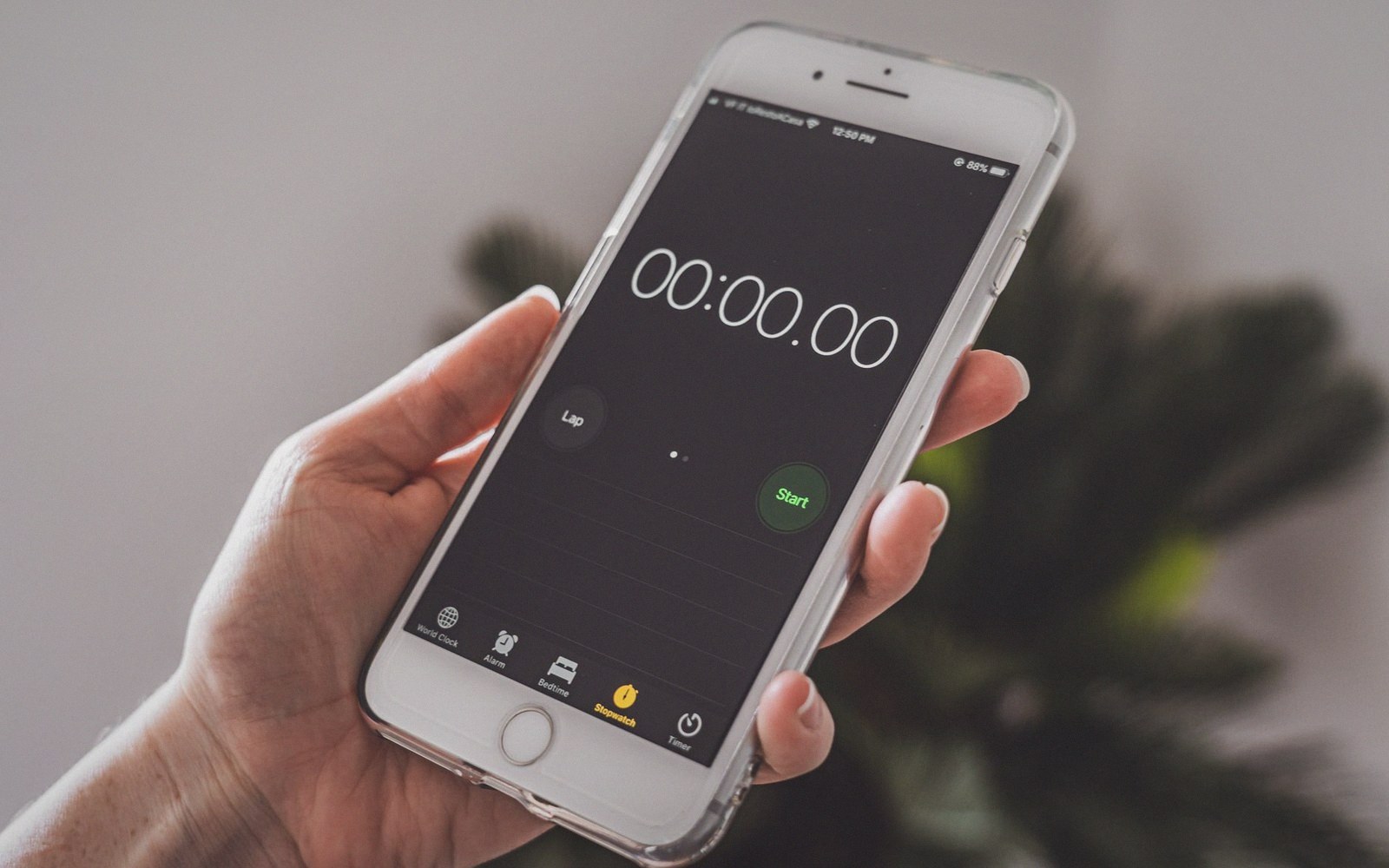
Timers of unequal length mean every return finds something finished and something still running.
Photo: Castorly Stock / Pexels
The logic of the waiting interval
A timer does several things at once. It limits how much a player can do in a single session, creating natural breakpoints without a human editor deciding when the story ends.
It schedules a return visit, because something will be ready — the crop harvested, the troop trained, the building upgraded — at a specific moment in the future. And it creates a hierarchy of patience, because not every player is willing to wait the same amount of time.

One ripening clock became a schedule, with a price attached to skipping it.
Supercell's Hay Day, released in 2012, used timers modestly: corn grows, chickens lay eggs, goods bake in the kitchen. The waits are short, friendly, domestic. The game's visual warmth reinforces the rhythm; a few minutes here, fifteen minutes there, an hour at most. Session shape follows the timer almost automatically — you check in, you set things going, you leave. The design asks almost nothing of attention beyond the initial decision.
Clash of Clans, also from Supercell, released the same year, uses a structurally identical mechanic at an entirely different scale. Upgrade a cannon to level four: fourteen hours. Research a new troop in the laboratory: four days.
The escalating wait as filter
Lifted out of the flow
- Short early timers (seconds to minutes) — build habit, give rapid feedback
- Medium timers (hours) — establish routine, begin scheduling return visits
- Long timers (days) — filter for committed players; highest conversion potential
- Timer skip = soft or hard currency expenditure; value rises with player investment
The range runs from seconds at the beginning of the game to more than a week at the top of the progression tree. This is not a single pacing device — it is a pacing system, tuned to hold a player for months rather than sessions.
The price of impatience
Neither game would attract much design analysis if the timer simply ran. The critical detail is the skip button. Supercell uses gems; a hard currency earned slowly in play or purchased directly. Spending a few gems to finish a ten-minute bake is a trivial decision that most players will make without thinking.

The queue is the interface: what is cooking, what is done, what is waiting.
Photo: Brett Jordan / Pexels
Spending gems to skip a fourteen-hour upgrade is a calculated one. Spending them to shave days off a week-long wait means the timer has already succeeded — it has become uncomfortable enough that some players will pay to end it.
This is what makes waiting a free-to-play mechanic rather than simply a design convention. The timer creates desire and then offers to sell its resolution.
Hard currency — purchased directly with real money; used to skip waits or acquire premium items
Ian Bogost, in his critical work on social and casual games, noted that what he called "exploitationware" uses the player's own engagement against them — the more invested you are in the progression, the more the wait costs you emotionally, and therefore the more the skip is worth. The mechanic only functions because the player cares. If they don't care, they leave; if they care enough, they pay.
The escalating wait curve also serves as a competence test and a filter. Early in Clash of Clans, upgrades finish quickly, giving the player rapid feedback and a sense of momentum. The gratification interval expands gradually, so that players who are still present after two weeks have already proved they will tolerate longer waits.
Also worth having to hand
Lifted out of the flow
Vocabulary
- Soft currency — earned through play; typically insufficient alone to skip long waits
- Conversion — the moment a free player makes a first real-money purchase
- Gratification interval — the designed gap between action and reward; expands as progression deepens
By the time a single upgrade costs days, the remaining population is self-selected: they have absorbed the game's pacing norms, they have investment in their village, and they are statistically the most likely to convert to spending. Slow the timer early and you lose new players; rush it late and you lose the revenue it generates.
Zynga pioneered much of the underlying vocabulary — FarmVille's crop timer established the mechanic on Facebook in 2009 — but Supercell formalised the architecture of escalating waits at scale, pairing it with direct currency exchange rather than social obligation. Where FarmVille leaned on friend networks to ease friction, Clash of Clans made the friction itself the product, calibrated against a player's willingness to pay.
Critics, including those using the language of dark patterns, argue that an artificial wait whose only resolution is payment is not pacing so much as coercion dressed as design. Defenders counter that the player can always simply wait; the skip is optional.
Both positions are coherent. What neither disputes is that the timer is doing structural work — shaping the session, scheduling return, and pricing impatience — in a way that no amount of level design alone could achieve.