The core loop
Every mobile game worth playing reduces to a cycle you could sketch on a napkin — and that simplicity is a feature, not a limitation.
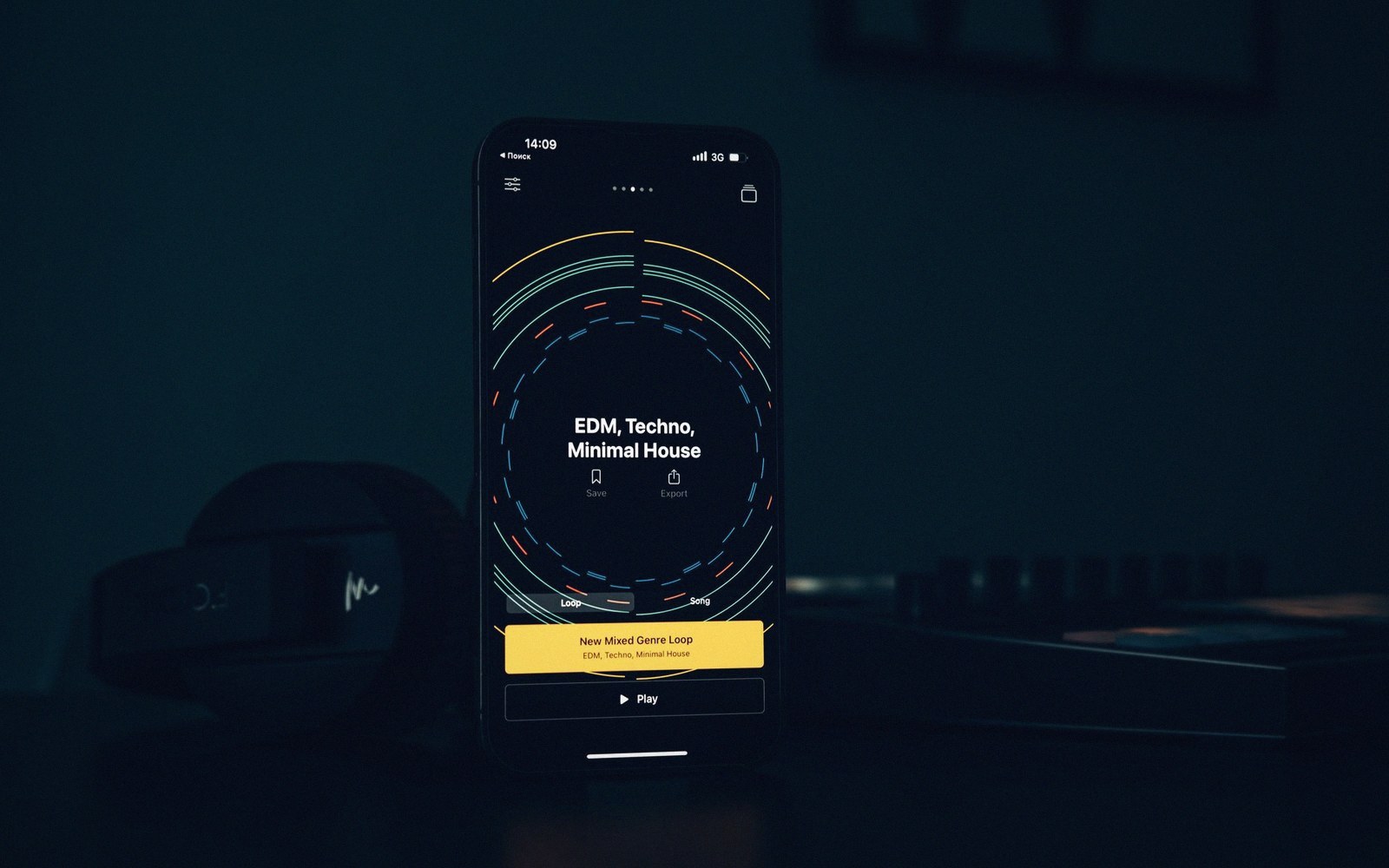
Act, reward, invest, wait — and the player can see all four.
Photo: Egor Komarov / Pexels
Act, reward, invest, wait
The core loop is the irreducible unit of play: the smallest sequence of actions a player can complete, be rewarded for, and then choose to repeat. In a farming game it might be plant → wait → harvest → spend. In a match-three it is shuffle → match → clear → progress. The actions vary; the structure is almost always the same four beats.
What makes the loop work is not the individual beat but the forward momentum between them. Each step primes the next. The reward answers the act; the investment gives the reward meaning; the wait creates an appetite for the act again.

The wait is the fourth step, not a gap between the other three.
Remove any beat and the cycle stalls. Skip the investment step — never let the player spend what they earn — and the reward becomes noise. Skip the wait — or make it imperceptible — and there is no tension separating desire from satisfaction.
This is why designers in Helsinki, San Francisco and Stockholm have arrived, largely independently, at the same template. Supercell's Clash of Clans, King's Candy Crush Saga and Rovio's Angry Birds each surface a different genre, but each one runs a legible loop underneath. The legibility matters.
The four-beat structure
Lifted out of the flow
- Act — the primary player action (tap, match, place, launch)
- Reward — the immediate payoff (stars, coins, cleared board)
- Invest — spending the reward on something that persists (upgrade, new item, unlocked level)
- Wait — a gap, real or implied, that separates desire from satisfaction
A player who can narrate their own loop — "I'm clearing levels to earn stars to unlock the next world" — is a player who knows what they are doing and why they should come back. Opacity does not create engagement; it creates confusion and then abandonment.
Why the loop has to close cleanly
The constraint of the mobile session sharpens the demand on the loop. A player interrupted mid-cycle — commute ends, meeting starts — needs the loop to close without stranding them. If the investment step is still pending when the screen goes dark, the reward feels lost.

The loop is drawn before the art: four states and the edges between them.
This is why well-designed loops fit inside a session of a few minutes, and why the save state must be continuous rather than checkpoint-based. The loop and the session are sized to each other; neither can be designed in isolation.
The investment beat deserves particular attention because it is where the loop converts into a progression system. Soft currency — the coins or gems or stars a player earns through play — is the link between one loop and the next. Spending it on a meaningful upgrade closes the loop with a sense of consequence.
Loop duration and session duration are co-designed constraints — neither is set first
The upgrade then makes the next act slightly more capable, the next reward slightly larger, which sustains the whole cycle across weeks rather than minutes. Zynga formalised this escalation in FarmVille, though the underlying rhythm is older than any mobile game; what mobile added was the constraint that every beat had to survive interruption.
Ian Bogost, writing critically about the genre, noted that these loops can function independently of whether the activity inside them has intrinsic value — the cycle itself is the hook.
Also worth having to hand
Lifted out of the flow
The loop and the session
- A loop that cannot close before interruption strands the player and weakens retention
- Continuous save state is a loop requirement, not a technical afterthought
Jesper Juul's research into casual play reinforces the point from the other direction: players drawn to these games are not disengaged; they are engaging with a structure that is genuinely satisfying, and the loop is the shape of that structure. The argument is not that the loop is morally neutral, only that its pull is real and legible.
The design risk is that a loop which runs too smoothly becomes invisible — which is not the same as seamless. A player who cannot feel the loop is a player who cannot feel progress, and a player without a felt sense of progress has no reason to return tomorrow.
The loop has to be just legible: clear enough that the player can hold it in mind, tight enough that it never feels like homework. That calibration — not the choice of theme, not the quality of the art — is what separates games that keep players from games that lose them.